
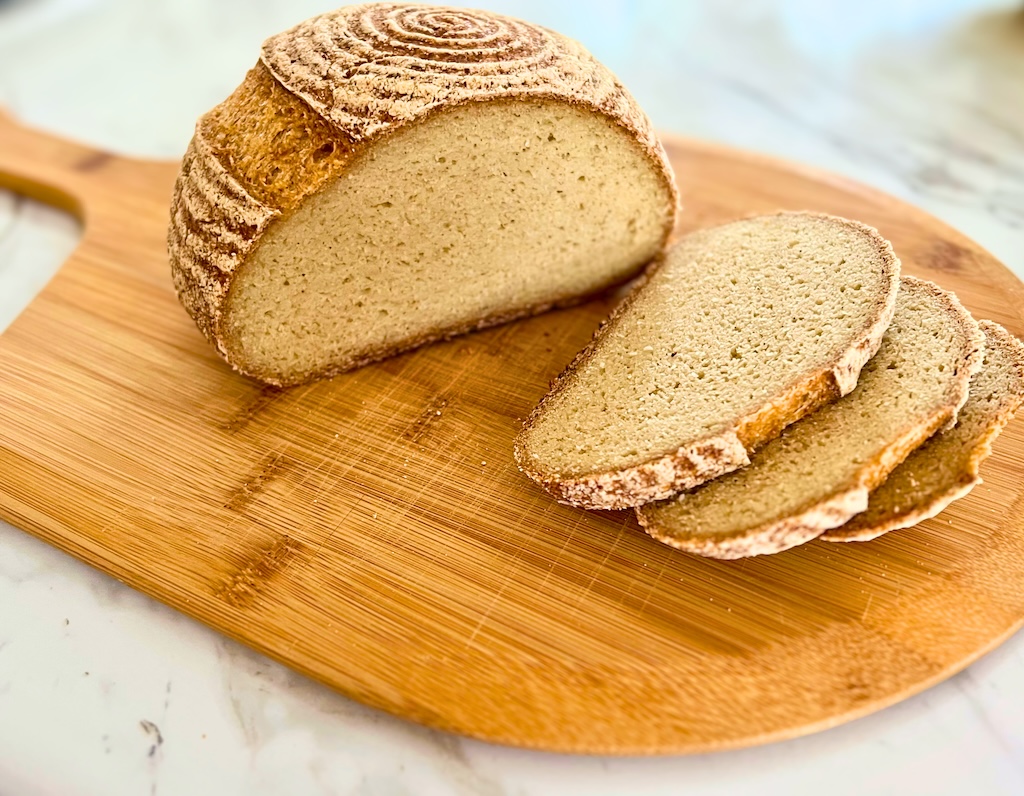
This Buckwheat & Thyme bread is completely gluten-free and naturally leavened with a gluten-free sourdough starter. Hints of fresh thyme and reminiscent of whole wheat bread; this recipe one to try whether you are gluten-free or not!

Lately, I have been experimenting with different flours and methods when it comes to gluten-free sourdough baking. I’ve been wanting to reduce the amount of starch and find some healthier grains to work with. This recipe checks those boxes very well.
About this Recipe
This bread only has one starch – tapioca flour, and the rest of the flours are pseudo-grains (buckwheat and quinoa flour) and almond flour (which isn’t a grain at all). To my surprise, this combination makes for a very nice crumb and the flavor is on point as well. Full disclosure, this recipe was inspired by the “Buckwheat & Rosemary bread” recipe found in the book Gluten-Free Sourdough Baking: The Miracle Method for Creating Great Bread Without Wheat by Mary Thompson.
Ingredients & Substitutions
- Warm Water – make sure to use filtered water.
- Coconut Sugar – you can also use maple sugar or brown sugar.
- Psyllium Husks – this is your “gluten” substitute for this bread. I haven’t experimented with different binders for this recipe. You could try xanthan gum or psyllium powder, but I’m not sure how it would work out.
- Buckwheat Flour – this is the main flour for this “buckwheat” bread, but if you can’t have buckwheat or you prefer something else, you could substitute with brown rice flour or sorghum flour.
- Tapioca Flour – you can also use arrowroot powder or potato starch.
- Almond Flour – I don’t know of a good substitute for almond flour, so if you can’t have it, I would just omit it and add more buckwheat or quinoa flour in it’s place.
- Quinoa Flour – You could try substituting with millet or sorghum flour.
- Active GF Sourdough Starter – you could also use a grain-free sourdough starter.
- Avocado Oil – olive oil would work great too.
- Salt
- Fresh Thyme – you can replace with any fresh herb you like or just leave it out altogether.
Directions
Mix Ingredients

- Weigh the warm water and add the coconut sugar and psyllium husks. Stir well to combine. Set aside while you weigh the dry ingredients.
- To a medium bowl, add buckwheat flour, tapioca flour, almond flour, and quinoa flour. Whisk to combine.
- To a large mixing bowl, or bowl of a stand mixer, add the active gluten-free sourdough starter and avocado oil. Then add the psyllium/honey mixture. Whisk well to combine.
- Add the dry ingredients to the wet ingredients. Use a dough whisk to form a shaggy dough.
- Use a stand mixer fitted with the paddle attachment or your hands, to mix the dough until no dry flour remains.

Autolyse
- Cover the bowl and let sit or “autolyse” for 20 minutes.
- Uncover the bowl and add the salt and fresh thyme. Mix again until the salt and thyme are fully incorporated.
Knead, Shape, & Proof

- Turn the dough out onto a counter that has been lightly floured with white rice flour.
- Gently knead until you get a smooth ball.
- Place the dough into a floured 7 inch banneton and cover with a shower cap or place into a large zip-lock bag.
- Let the dough sit at room temperature for 1 hour and then place it in the refrigerator for 18-48 hours.

Score & Bake

- When you are ready to bake, take the dough out of the refrigerator and let it warm up at room temperature a bit while you pre-heat the oven.
- Pre-heat your oven to 500 degrees F with a Dutch oven inside. Set a timer for 1 hour.
- Turn the dough out onto a piece of parchment paper and score as desired.
- Carefully place the dough (still on parchment paper) into the Dutch oven and cover.
- Reduce the oven to 450 degrees F and bake covered for 25 minutes.
- Uncover and reduce the oven to 400 degrees F and bake for 35 minutes.
- Reduce the oven temperature once more to 350 degrees F and bake for an additional 20 minutes.
- Let cool on a wire rack for at least 4 hours, overnight is best.

Enjoy!
Thanks for taking the time to read through this recipe. Let me know if you have any questions in the comments. Also, if you make this bread, I would love to know how it turns out, so please feel free to comment below!

Buckwheat and Thyme Sourdough Bread

Equipment
- 1 7 inch banneton basket
- 1 Stand Mixer optional
- 1 Dutch Oven
Ingredients
- 260 g warm water
- 30 g coconut sugar
- 23 g psyllium husks
- 100 g buckwheat flour
- 70 g tapioca flour
- 30 g almond flour
- 30 g quinoa flour
- 206 g active gluten-free sourdough starter
- 30 g avocado oil
- 7 g salt
- 2 g chopped fresh thyme
Instructions
- Weigh the warm water in a glass measuring cup and add the coconut sugar and psyllium husks. Stir well to combine. Set aside while you weigh the dry ingredients.260 g warm water, 23 g psyllium husks, 30 g coconut sugar
- To a medium bowl, add buckwheat flour, tapioca flour, almond flour, and quinoa flour. Whisk to combine.100 g buckwheat flour, 70 g tapioca flour, 30 g almond flour, 30 g quinoa flour
- To a large mixing bowl, or bowl of a stand mixer, add the active gluten-free sourdough starter and avocado oil. Then add the psyllium/honey mixture. Whisk well to combine.206 g active gluten-free sourdough starter, 30 g avocado oil
- Add the dry ingredients to the wet ingredients. Use a dough whisk to form a shaggy dough.
- Use a stand mixer fitted with the paddle attachment or your hands, to mix the dough until no dry flour remains.
- Cover the bowl and let sit or "autolyse" for 20 minutes.
- Uncover the bowl and add the salt and fresh thyme. Mix again until the salt and thyme are fully incorporated.7 g salt, 2 g chopped fresh thyme
- Turn the dough out onto a counter that has been lightly floured with white rice flour. Gently knead until you get a smooth ball.
- Place the dough into a floured 7 inch banneton and cover with a shower cap or place into a large zip-lock bag.
- Let the dough sit at room temperature for 1 hour and then place it in the refrigerator for 18-48 hours.
- When you are ready to bake, take the dough out of the refrigerator and let it warm up at room temperature a bit while you pre-heat the oven. Pre-heat your oven to 500 degrees F with a Dutch oven inside. Set a timer for 1 hour.
- Turn the dough out onto a piece of parchment paper and score as desired.
- Carefully place the dough (still on parchment paper) into the Dutch oven and cover. Reduce the oven to 450 degrees F and bake covered for 25 minutes.
- Uncover and reduce the oven to 400 degrees F and bake for 35 minutes.
- Reduce the oven temperature once more to 350 degrees F and bake for an additional 20 minutes.
- Let cool on a wire rack for at least 4 hours, overnight is best.
Video
Notes
- If you notice the bottom of your bread gets too dark, take it out of the Dutch oven when you reduce the temperature to 350 degrees, and place it on a pizza stone or on the oven rack.




Leave a Comment